 Studio Off Hours
Tutorial or Workshop? How to Choose the Right Way to Learn Your Next Craft
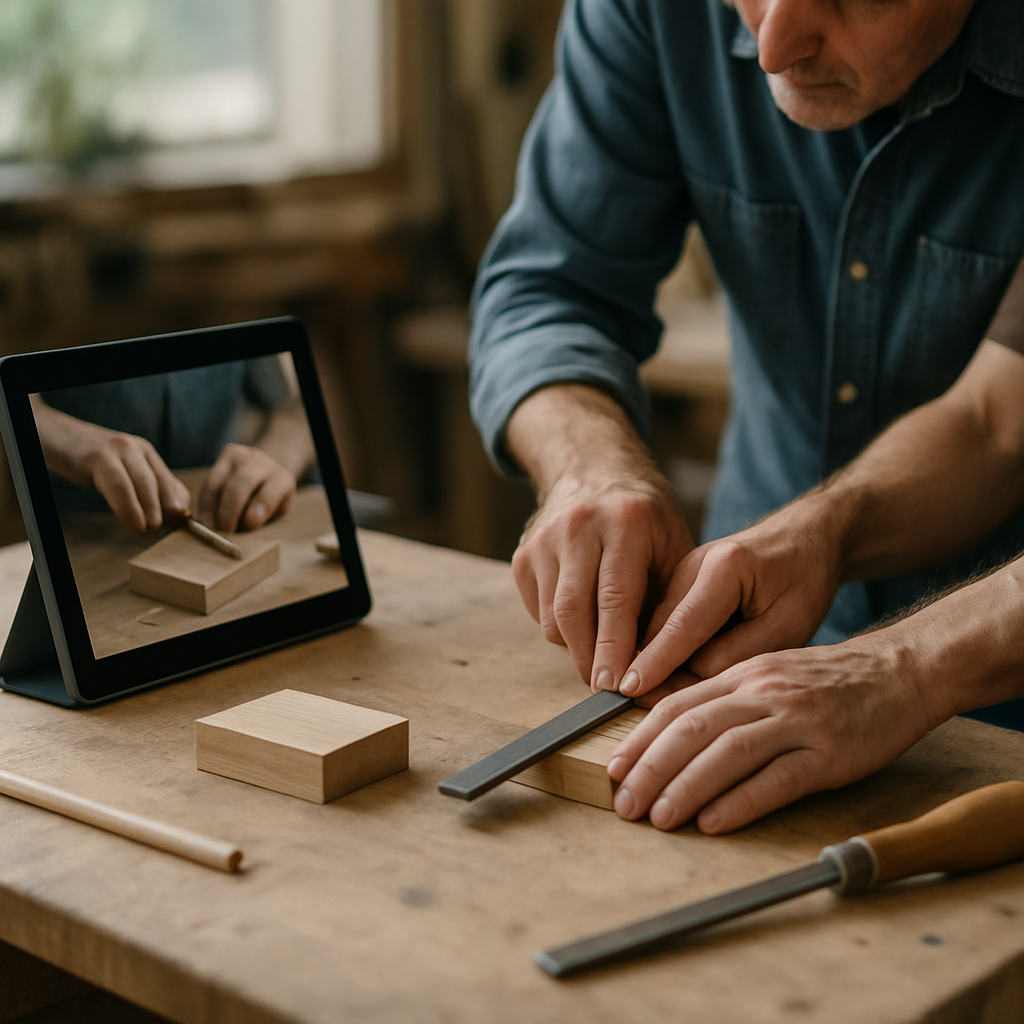
There have never been more ways to learn a craft. Free video tutorials cover everything from dovetail joints to darning; online course platforms sell polished curricula for the price of a takeaway; and in most towns, real humans still teach real classes in rooms that smell of sawdust, clay or turpentine. The question facing every aspiring maker is no longer can I learn this? but which way of learning will actually stick?
Having watched countless hobbyists start, stall and succeed, the honest answer is: it depends on the craft, the stage you are at, and the kind of learner you are. Here is a practical way to decide.
What Video Tutorials Do Brilliantly
The free tutorial ecosystem is one of the genuine wonders of the modern creative world, and it deserves its reputation. Video excels at:
- Zero-commitment exploration. Before spending a penny, you can watch an entire craft from start to finish and discover whether it appeals. Many people rule hobbies in or out this way, cheaply and correctly.
- Replayability. A knitting stitch or a whittling grip can be rewound and slowed down twenty times without embarrassment. No human teacher offers that patience.
- Specific problems at specific moments. Stuck on one step at 10 pm on a Tuesday? Someone has made a video about exactly that step. This on-demand precision is where video is untouchable.
- Breadth of styles. For any technique, dozens of teachers demonstrate dozens of variations. You can triangulate between them and find the approach that suits your hands.
The costs are quieter but real. Video cannot see you. It cannot tell you that your grip is subtly wrong, your tension too tight, your blade angle off by ten degrees — the small errors that, unnoticed, compound into frustration and quitting. Video learners also fall easily into watching as a substitute for making; the tutorial queue grows while the hands stay idle.
What In-Person Workshops Do That Video Cannot
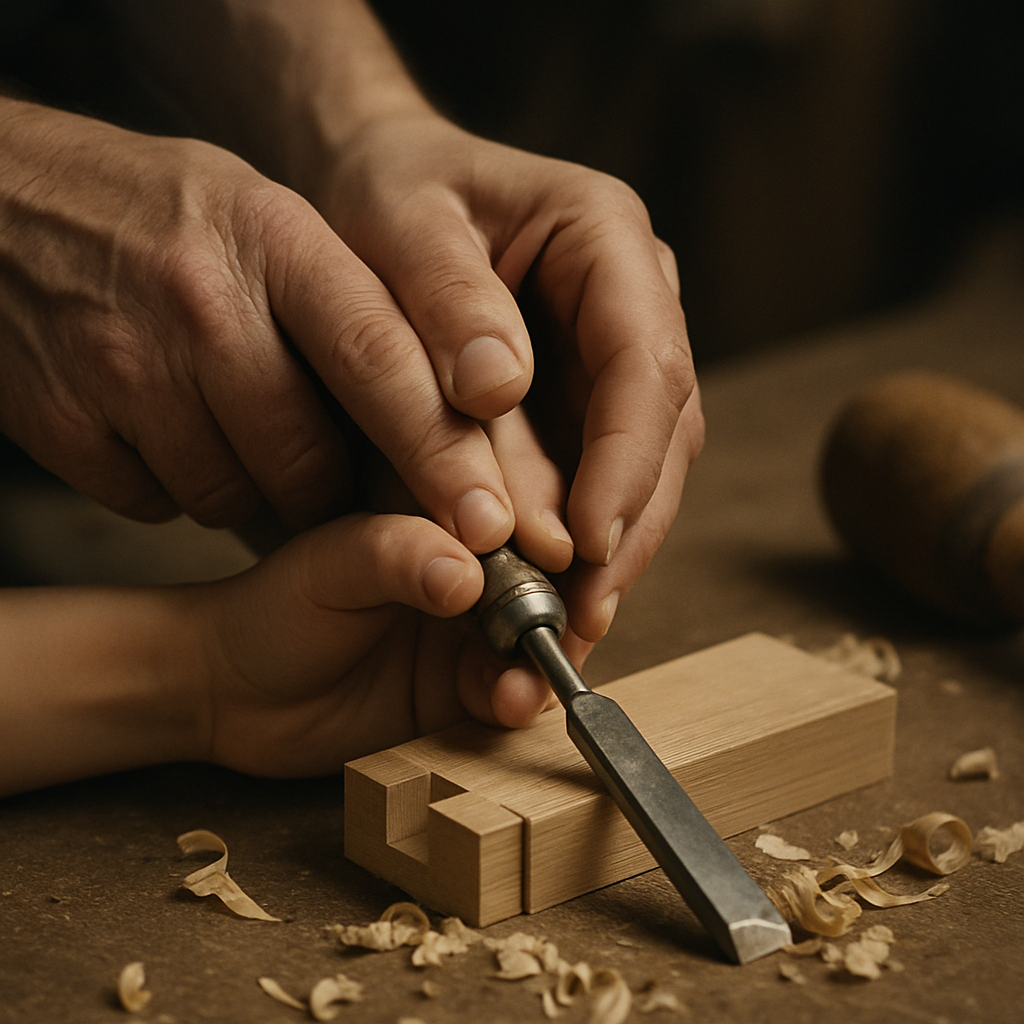
A good workshop justifies its price in the first hour, usually through a correction. A teacher glances at your hands, adjusts one thing, and a technique that fought you for weeks suddenly works. This feedback loop — being seen while you work — is the irreplaceable core of in-person learning, and it matters most at the very beginning, when bad habits are being formed invisibly.
Workshops offer other advantages that rarely make the marketing copy. You work with proper equipment before buying your own, which prevents expensive mistakes. You calibrate your expectations by watching other beginners struggle at exactly your level — an antidote to the polished competence of video instructors. And you meet people, which for many hobbyists quietly becomes the main event; plenty of long creative friendships began at adjacent pottery wheels.
The drawbacks are practical: cost, scheduling, geography and pace. A class moves at the group's speed, not yours, and a mediocre teacher in person is worse than an excellent one on screen.
Matching the Method to the Craft
Some crafts tolerate self-teaching better than others, and it is worth being honest about which kind you are picking up.
High feedback crafts — pottery throwing, glasswork, blacksmithing, welding, most textile skills involving tension — depend on physical sensations that cameras cannot transmit. What does centred clay feel like? No video can tell you; a teacher's hands over yours can. Start these in person if at all possible.
Safety-critical crafts — anything involving power tools, kilns, torches or caustic chemistry — deserve at least an introductory session with supervision, full stop.
Visual, self-checking crafts — drawing, lettering, origami, digital art, simple sewing — suit video learning well, because your own eyes can verify the result against the reference.
Knowledge-heavy crafts — like fermentation or natural finishing — often learn best from books and structured courses, where the why is explained rather than just demonstrated.
The Hybrid Path Most Good Makers Take
In practice, the learners who progress fastest almost always blend the two. A common and effective pattern: explore by video, foundation in person, develop by video, breakthrough in person.
Watch freely until a craft hooks you. Take one beginner workshop to install correct fundamentals under a live eye. Then practise and expand through tutorials at your own pace for months. When you plateau — and everyone plateaus — book another day course or join an open studio, because plateaus almost always hide a physical error that a teacher will spot in minutes.
Budget accordingly: many experienced hobbyists suggest spending roughly as much on occasional instruction as on materials. Tuition feels expensive until you compare it with the cost of a year of frustrated, wrongly-practised evenings.
Learn the Way You'll Actually Continue
The best learning method, in the end, is the one that keeps you making. If a workshop's fixed date is what gets you off the sofa, that structure is worth every penny. If midnight tutorials in the kitchen fit your life, that is your classroom. Choose deliberately, mix shamelessly, and remember that no method teaches as much as the hours your own hands put in afterwards.