 Studio Off Hours
One Knife, One Stick: Whittling as the Simplest Way Back into Making
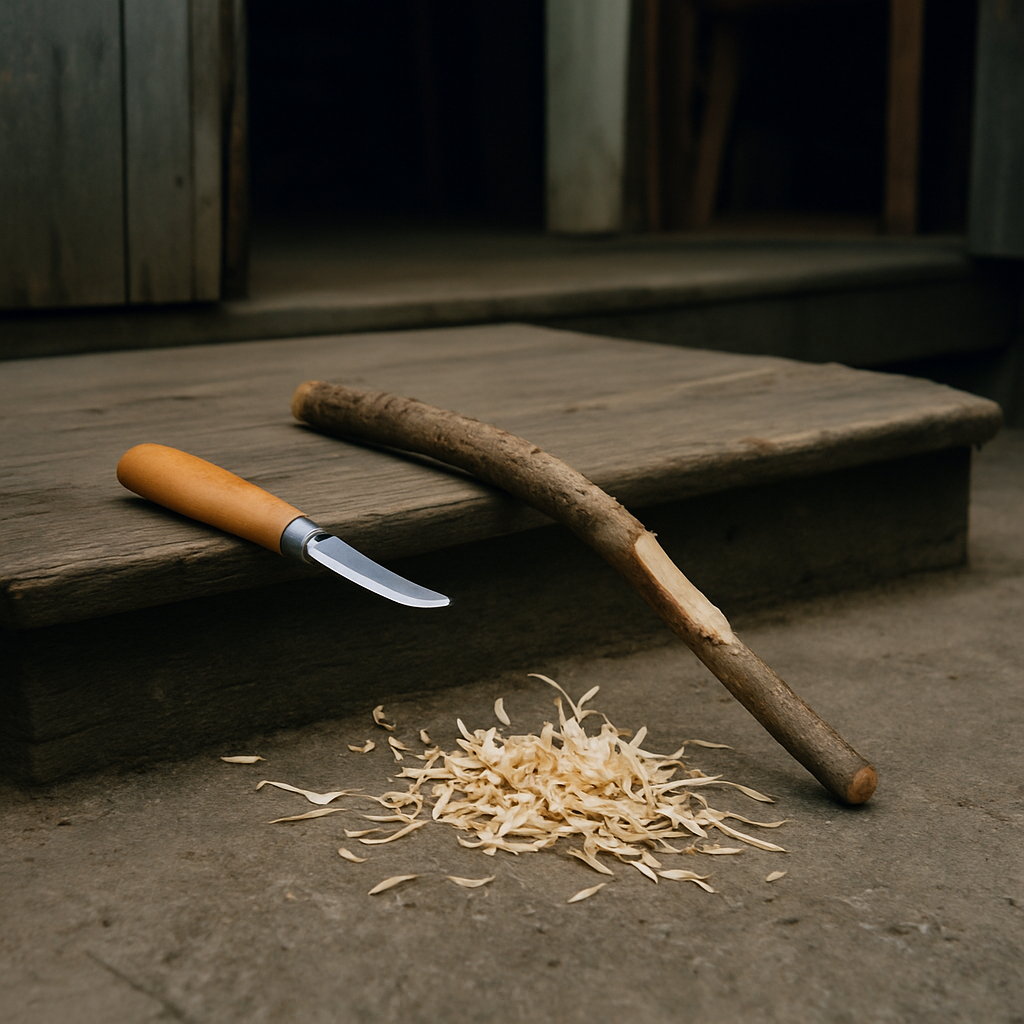
Most crafts greet beginners with a shopping list. Whittling greets you with a knife and a piece of wood, and that is the entire barrier to entry. Perhaps that is why this quiet, ancient pastime is enjoying such a revival among people who spend their days in digital work: it is the most portable, most affordable and least precious way to start making physical things again. No studio required, no software updates, no cloud sync. Just an edge, some timber, and a growing pile of curled shavings at your feet.
The Case for Starting Small
Woodworking as a hobby can feel intimidating — table saws, dust extraction, a garage's worth of clamps. Whittling and hand carving sidestep all of it. A carving knife costs about as much as two cinema tickets, a bag of basswood blanks about the same, and your first project can be finished in an evening on the sofa with a tea towel across your lap.
That low stake is exactly what makes it powerful. There is no sunk cost demanding you persist, no expensive machine guilt-tripping you from the corner. You carve because the material is interesting and the motion is soothing, and if tonight's spoon goes wrong, tomorrow's blank costs pennies. For lapsed makers — people who used to draw, build or craft and let it slide — whittling is one of the gentlest re-entries available.
There is also something honest about a craft old enough that your great-great-grandparents would recognise every gesture of it. The techniques have not changed because they did not need to.
Tools: Buy Little, Buy Decent
The temptation with any new hobby is to over-equip. For carving, three items cover your first year:
- A fixed-blade carving knife. Scandinavian makers such as Mora produce excellent, affordable options. Avoid folding pocket knives for serious carving — the blade can close on your fingers.
- A hook knife if spoons appeal to you, for hollowing the bowl.
- A cut-resistant glove for the hand holding the wood, plus a simple thumb guard. Wear them. Every experienced carver has a scar story from the day they didn't.
Add a leather strop with polishing compound to keep your edge keen. A sharp knife is genuinely safer than a dull one, because it cuts where you aim instead of skating unpredictably. Five minutes of stropping before each session becomes a small ritual — the carver's equivalent of a musician tuning up.
What to Carve First
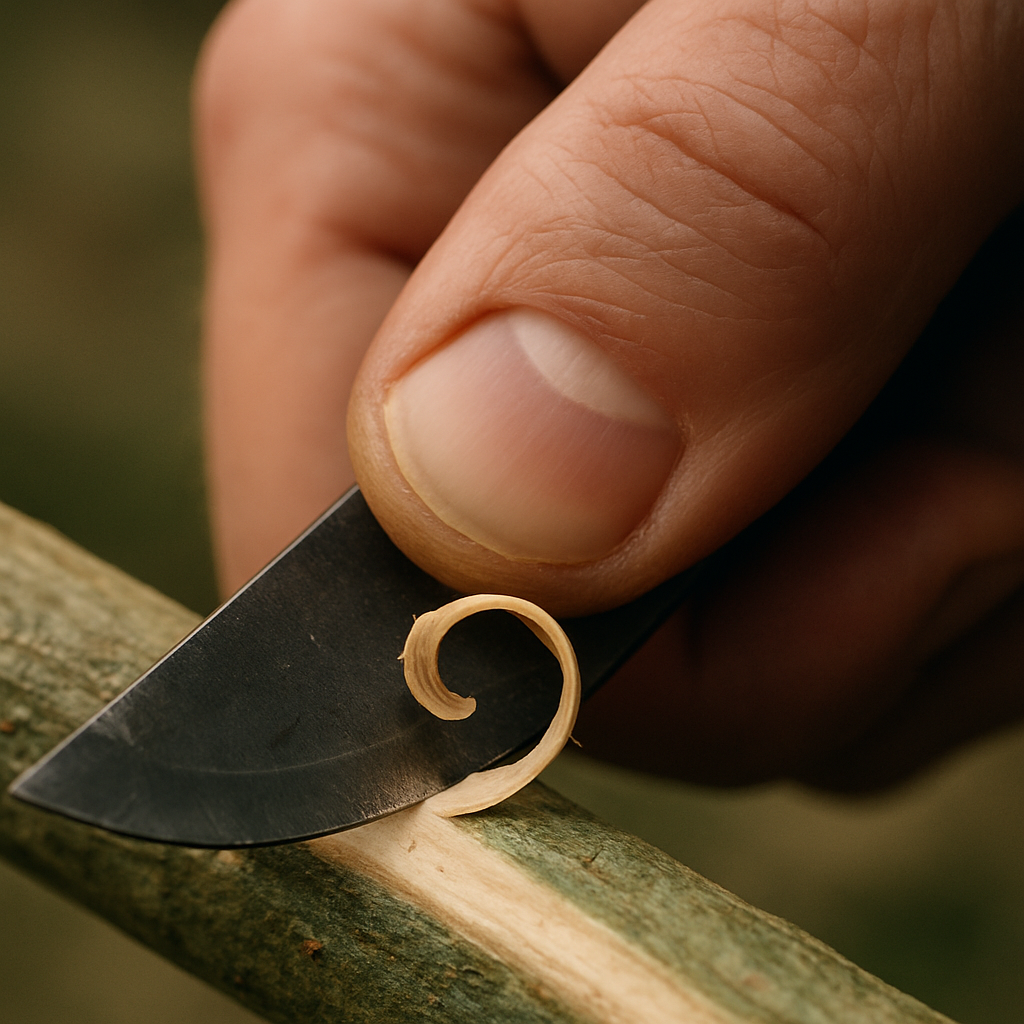
Basswood (lime, if you are British) is the beginner's friend: soft, even-grained and predictable. Green wood — freshly cut birch, sycamore or fruit wood — is even more pleasurable to carve, slicing like firm cheese, which is why spoon carvers prize it.
Good first projects, roughly in order:
1. A simple whittled mushroom or gnome — teaches basic knife grips and grain awareness in an hour.
2. A butter knife — your first genuinely useful object, all straight-ish cuts.
3. An eating spoon — the classic. The bowl teaches the hook knife; the handle teaches proportion; the whole thing teaches humility.
4. Chip-carved patterns on a flat board, if geometry appeals more than objects do.
Learn the fundamental grips early — the push cut, the pull cut braced against your thumb, the chest-lever cut — and always, always cut away from the hand holding the work. Grain direction will fight you at first; reading it is the actual skill of carving, and it only comes from ruined spoons.
The Unexpected Benefits
Carvers talk about their hobby the way runners talk about running: the activity is the reward. The rhythmic slicing, the accumulating shavings, the slow emergence of a shape from a blank — it occupies the hands so completely that the mind finally goes quiet. Several small studies have linked repetitive handcraft to reduced stress markers, but you will not need a study to feel it after your third evening.
It is also gloriously screen-free and interruption-proof. You cannot doom-scroll with a knife in one hand and a half-carved spoon in the other. And because a project fits in a jacket pocket, carving travels: parks, trains, camping trips, the fifteen minutes while dinner simmers.
Finished spoons, meanwhile, make the best kind of gift — modest, useful and unmistakably made by you. Rub them with food-safe oil, and they will outlive most of your furniture.
Pick Up the Knife
If your making muscles have atrophied behind a desk, do not plan a grand return with a workshop build-out and a project backlog. Buy one knife, one glove and one bag of blanks. Carve something small and slightly wonky this week.
The wonky mushroom matters more than it looks like it should. It is proof that your hands still know how to make things — and proof, in a life full of intangible work, that not everything you produce has to live on a server. Some of it can live in the kitchen drawer, slowly darkening with use, quietly outlasting every deadline that once felt so urgent.