 Studio Off Hours
Virtual Reality in the Creative Process: Immersive Ideation
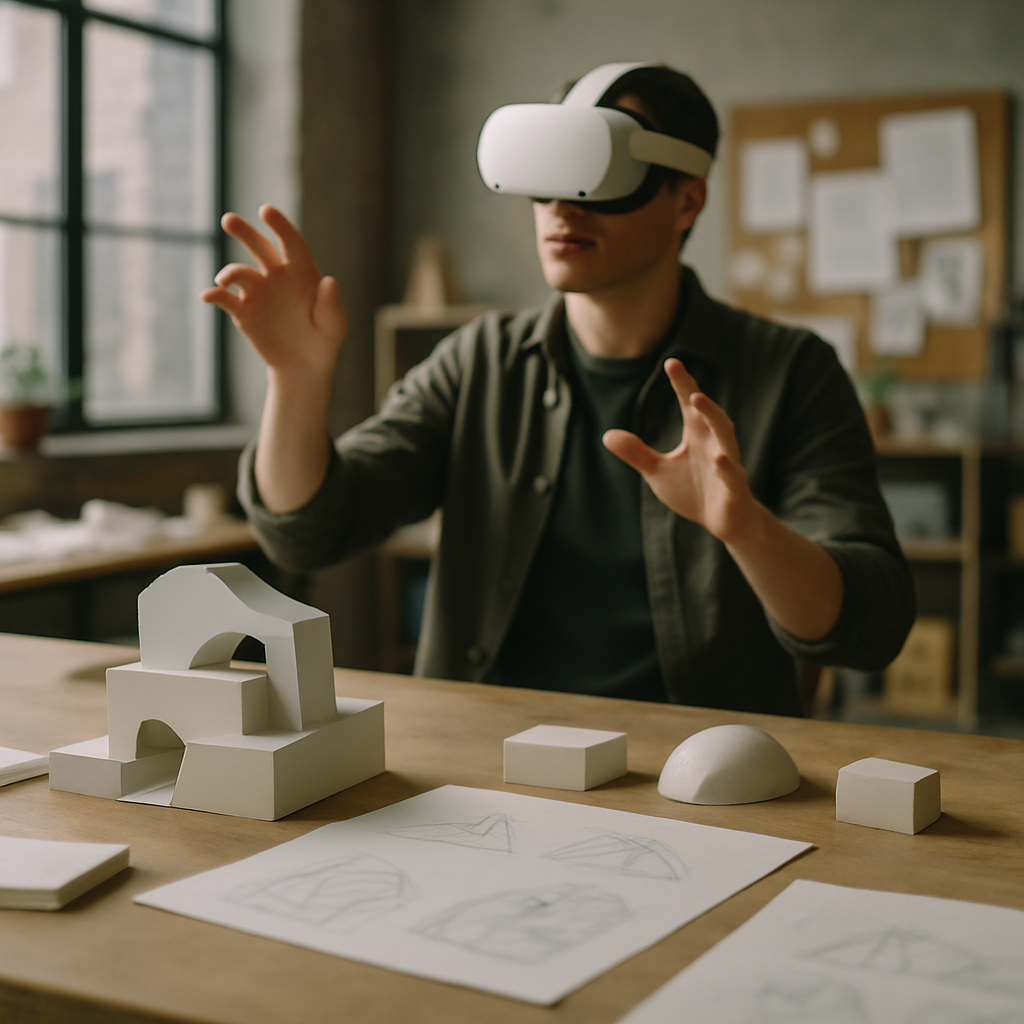
Virtual reality (VR) has transformed how creators ideate, innovate, and execute their visions, ushering in a new era of immersive ideation. This technology, once confined to the realms of gaming and entertainment, now permeates various creative practices, offering artists, designers, and makers unparalleled opportunities to engage with their work. By allowing practitioners to step inside their creations, VR has become an invaluable tool for exploring ideas and testing concepts in a fully immersive environment. The ability to visualize and manipulate designs in three-dimensional space not only enhances creativity but also fosters collaboration and innovation across disciplines, reshaping the landscape of modern creative practices.
Bridging the Gap Between Imagination and Reality
Virtual reality technology represents a significant shift in how concepts are brought to life, bridging the gap between imagination and reality. For years, creatives have relied on two-dimensional sketches, models, and prototypes to express their visions. Companies like Oculus, a leading entity in VR development, have developed systems that allow users to step inside a virtual space and experience their ideas unfolding around them. This immersive experience eliminates the limitations of traditional design tools, enabling designers to create in an environment that mimics the 3D world they’re ultimately designing for.
In architecture, firms like Holodeck VR are using virtual reality not only to visualize buildings and spaces but also to simulate interactions within these environments before any physical work begins. This capability is transforming design processes, as architects and clients can virtually walk through structures, make real-time adjustments, and foresee potential challenges otherwise invisible in blueprints or CAD models. For fashion designers, VR offers a similar evolution. Companies such as The Fabricant are pioneering digital fashion shows, allowing creators to experiment with garment design and show collections in virtual spaces, thus transcending the limitations of physical fabric and runway presentations.
This convergence of technology and creativity is not limited to professional environments. It has seeped into educational institutions, where students use VR to explore and create without the confines of physical materials. Courses and workshops are now incorporating VR to teach complex concepts through interactive experiences, fostering a new generation of creators who think beyond the traditional methods and tools of their crafts.
Enabling Collaborative and Interactive Creativity
Virtual reality is inherently collaborative, designed to foster communication and interaction in innovative ways. Platforms like Sandbox VR create shared virtual environments where teams can co-create and brainstorm ideas, despite geographical barriers. This capability is essential in a globalized creative landscape where teams often span multiple locations and time zones. VR enables real-time collaboration on projects, allowing participants to manipulate shared objects, annotate designs, and offer feedback in ways that are both intuitive and deeply engaging.
In the field of product design, companies such as Gravity Sketch are at the forefront of using VR to revolutionize how teams conceptualize and refine products. By providing a virtual platform where designers can collaboratively sculpt, iterate, and present their ideas in 3D, Gravity Sketch enhances the ideation process. Teams can work together in a VR environment, manipulating designs as if they were tangible objects. This interaction not only enhances creativity but also significantly speeds up the decision-making process—an invaluable asset for industries where time-to-market is crucial.
Moreover, the entertainment industry is exploring the potential of VR to create collaborative works of art. Virtual reality venues are emerging where artists can come together to create immersive storytelling experiences. Projects such as those pioneered by The VOID involve multiple creators from various disciplines—writers, animators, sound engineers—collaborating in a virtual space to craft experiences that engage audiences in new and profound ways. Through this interactive medium, VR is redefining how stories are told and experienced, offering creators limitless possibilities in their storytelling endeavors.
Transforming the Design Process
The integration of virtual reality into the design process is altering traditional workflows and enhancing creative output. By enabling designers to work within immersive environments, VR facilitates a new approach to design thinking that prioritizes spatial awareness and experiential understanding. This shift is evident across multiple industries, notably in automotive design, where companies like Ford and Volkswagen use VR to streamline their design processes.
Automotive designers can now step inside their concepts, exploring every detail of their vehicle designs before a single model is built. This immersive inspection allows for thorough review and iteration of elements such as interior layouts, ergonomic features, and aesthetic details. VR's ability to simulate real-world conditions and scenarios provides designers with insights that would be difficult—or impossible—to gather from traditional design methods. This experiential dimension of VR fosters a more holistic design approach, encouraging designers to consider how users will interact with their products in real-world settings.
Furthermore, the use of VR in the design process supports rapid prototyping and testing, reducing the time and cost associated with physical models. VR allows designers to experiment freely, quickly testing hypotheses and exploring different iterations without the constraints of material and labor costs. This freedom not only accelerates innovation but also democratizes design, making it accessible to a broader spectrum of creators who can now bring their ideas to fruition with fewer barriers.
Engaging the Senses for Deeper Connections
One of the most compelling aspects of virtual reality is its ability to engage multiple senses, creating deeper emotional and cognitive connections to the creative work. By immersing users in a fully sensory experience, VR transcends traditional visual and auditory stimuli to include haptic feedback and spatial sound, enhancing the overall impact of the creative endeavor. This multisensory engagement is particularly compelling in fields such as art and virtual exhibitions.
Artists are increasingly leveraging VR to create immersive art installations that interact with viewers on multiple levels. For example, contemporary artists like Olafur Eliasson are using VR to expand the boundaries of art, enabling audiences to engage with their work in profoundly personal ways. By incorporating elements such as soundscapes, tactile sensations, and interactive visuals, these installations provide a more holistic experience that challenges perceptions and evokes a stronger emotional response.
Similarly, in the realm of virtual filmmaking, VR enables directors to create narratives that envelop viewers, making them active participants in the story rather than passive observers. Companies like VRWERX are exploring the potential of VR to transform cinematic experiences by offering 360-degree storytelling that invites viewers to look around and explore their environments. This form of storytelling creates a deeper, more engaging narrative journey, capturing audiences' attention and imagination in ways traditional media cannot.
Overcoming Challenges and Looking Ahead
While the benefits of virtual reality in creative processes are undeniable, challenges remain that need addressing as the technology evolves. VR development requires significant investment in hardware and software, which can be prohibitive for smaller studios and independent creators. Additionally, the learning curve associated with mastering VR tools and platforms can present an initial barrier to entry.
Despite these challenges, advancements in technology and a growing interest in VR across creative sectors suggest a promising future. Companies like Unity and Unreal Engine are working towards making VR more accessible by developing tools and resources that simplify VR content creation. As the technology continues to mature, we can expect to see more user-friendly interfaces and affordable VR solutions that will open up opportunities for a wider range of creators.
The potential for VR to revolutionize the creative process is immense, as it encourages experimentation and innovation across disciplines. As more creators embrace the possibilities of VR, the technology will continue to influence how ideas are conceptualized, refined, and experienced. Looking ahead, virtual reality promises to be an integral part of the creative landscape, driving new ways of thinking and creating that will inspire future generations of makers and artists.