 Studio Off Hours
Beyond the Mood Board: Building a Personal Inspiration Library That Actually Feeds Your Work
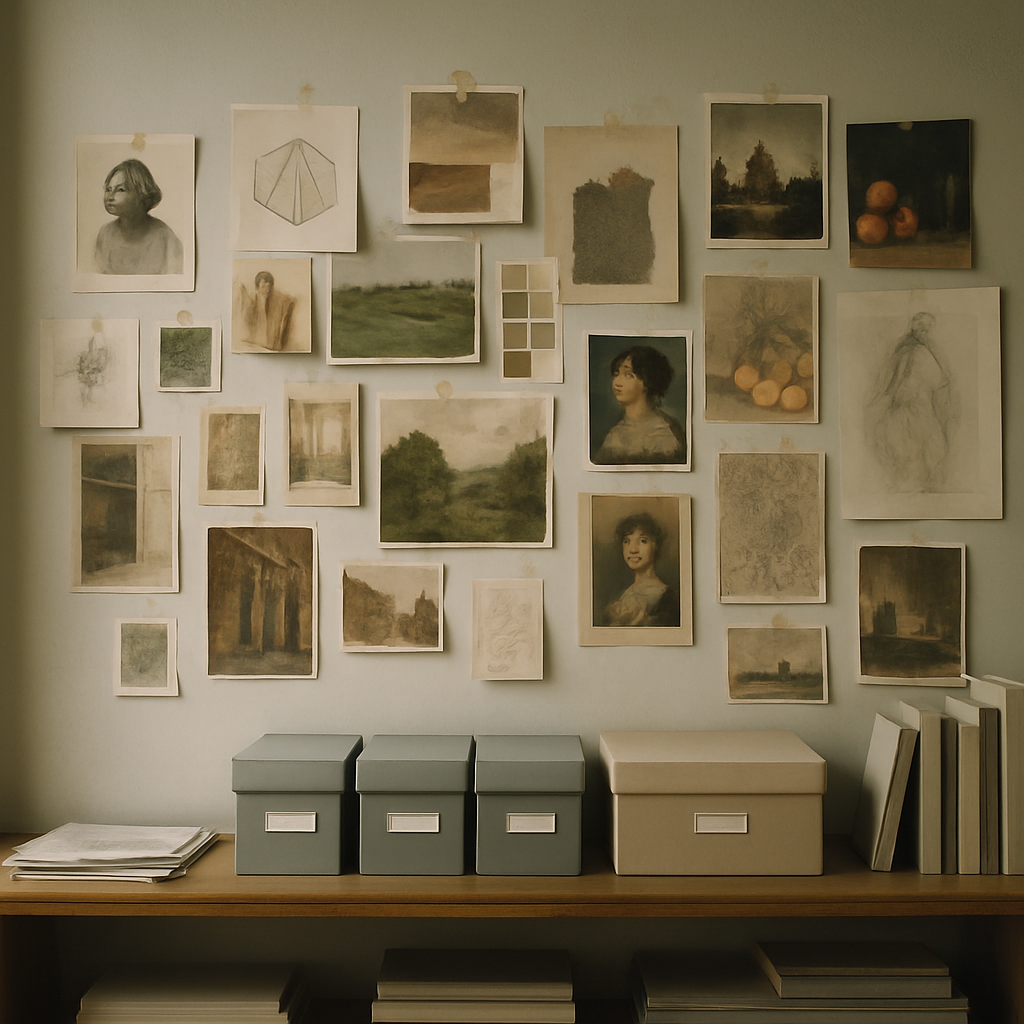
Every creative person collects inspiration. Screenshots pile up in camera rolls, bookmarks accumulate in browsers, saved posts vanish into the archives of three different apps. And yet, when a new project begins and you actually need that perfect reference — the tile pattern from Lisbon, the colour pairing from that book cover — it is nowhere to be found. Collecting is easy. Retrieving is the hard part, and retrieval is the only part that matters.
The difference between a junk drawer of screenshots and a genuine inspiration library comes down to a handful of habits. Here is how working artists, designers and makers build reference collections they actually use.
Collect Less, Annotate More
The first counterintuitive rule: save fewer things. An inspiration library is not an archive of everything you have ever liked; it is a working tool, and its value drops as noise rises.
Before saving anything, apply a one-second filter: what specifically is interesting here? If you cannot name it — the composition, the palette, the material, the mood — you are saving out of reflex, not intent. Skip it.
When something does pass the filter, capture the reason alongside the image. A single line is enough: "the way the shadow becomes part of the lettering," "green + terracotta, unexpectedly warm," "border stitching worth stealing for the quilt." That annotation is the difference between a library and a landfill. Six months later, the image alone tells you nothing; the note tells you exactly why past-you thought future-you would need it.
Choose One Home and Defend It
Fragmentation kills inspiration libraries. Saved posts here, screenshots there, a Pinterest board from 2023, a folder called "refs" and another called "refs2" — the collection exists, but effectively nowhere.
Pick a single primary home for visual references and route everything into it. The specific tool matters far less than the singularity:
- PureRef or a simple folder structure suits people who like local files and zero subscriptions.
- Notion, Milanote or Are.na suit collectors who want notes, links and images living together.
- A physical scrapbook or box remains genuinely underrated — torn pages, fabric swatches, ticket stubs, paint chips. Physical references have a way of resurfacing at the right moment that digital ones do not.
Whatever you choose, build a weekly ten-minute routing habit: screenshots and saves from all the scattered inboxes get moved into the library, annotated, or deleted. The inboxes are for capture; the library is for keeping.
Organise Around Questions, Not Categories
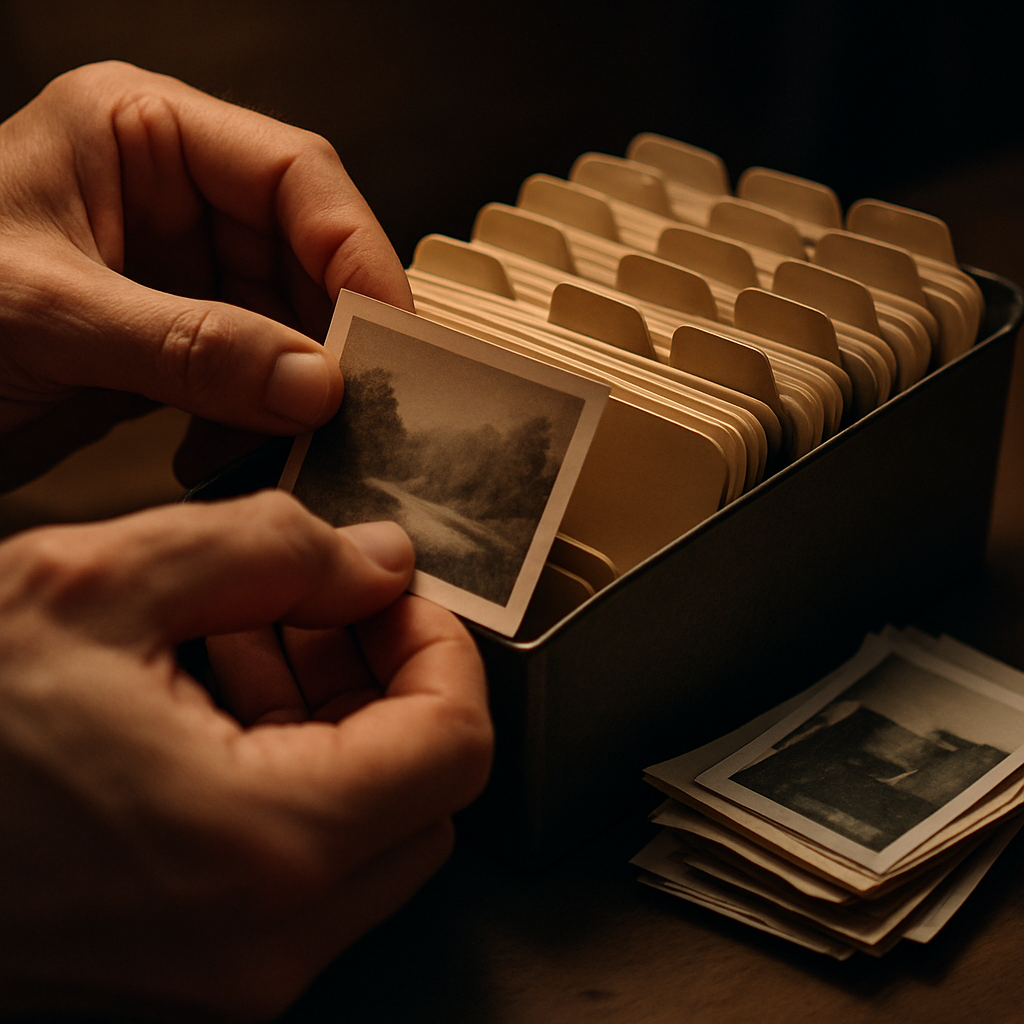
Rigid taxonomies collapse under real use. Instead of filing by medium or source, organise around the questions your work actually asks. Folders or tags like palettes that feel calm, interesting edges and borders, texture: worn and weathered, layouts with lots of air map directly onto the moments when you go looking.
Alongside the evergreen collection, create a temporary board for each active project. When a project starts, pull relevant pieces from the main library into it and hunt for a few fresh ones. When the project ends, dissolve the board — return the keepers to the library, delete the rest. This two-tier structure keeps the permanent collection lean while giving every project a focused reference wall.
And date things where you can. Watching your own taste drift over years is one of the quiet pleasures of a long-running library, and a surprisingly useful record of your development.
Feed It from Outside the Feed
A library built entirely from the same three apps everyone else uses will make your work look like everyone else's. Algorithms are excellent at showing you what is popular in your niche right now, which is precisely the material most likely to date your work.
Deliberately widen the intake. Secondhand books and charity-shop annuals are dense with unfashionable, therefore fresh, material. Museums and their online archives offer centuries of pattern, colour and composition, most of it copyright-free. Nature, hardware shops, food packaging, old maps, vintage manuals and the walls of unfamiliar neighbourhoods all yield references no feed will ever serve you. Photograph relentlessly when you travel — not landmarks, but doors, signage, tiles and textures.
A good rule of thumb: for every reference saved from social media, add one from the physical world or from something older than you are. The mix is what makes a library personal rather than algorithmic.
The Library Is a Conversation with Your Own Taste
Kept well, an inspiration library becomes more than a utility. Browsing it on an idle evening — no project in mind — is one of the most reliable ways to start wanting to make something. Patterns emerge that you never consciously chose: a recurring palette, an obsession with certain shapes, a mood that keeps reappearing. That is your taste, made visible.
Start this week. One home, honest annotations, a weekly routing habit, and at least one source the algorithm would never show you. Your future projects are already waiting in there.