 Studio Off Hours
The Quiet Craft of Bookbinding: Making Notebooks You'll Actually Treasure
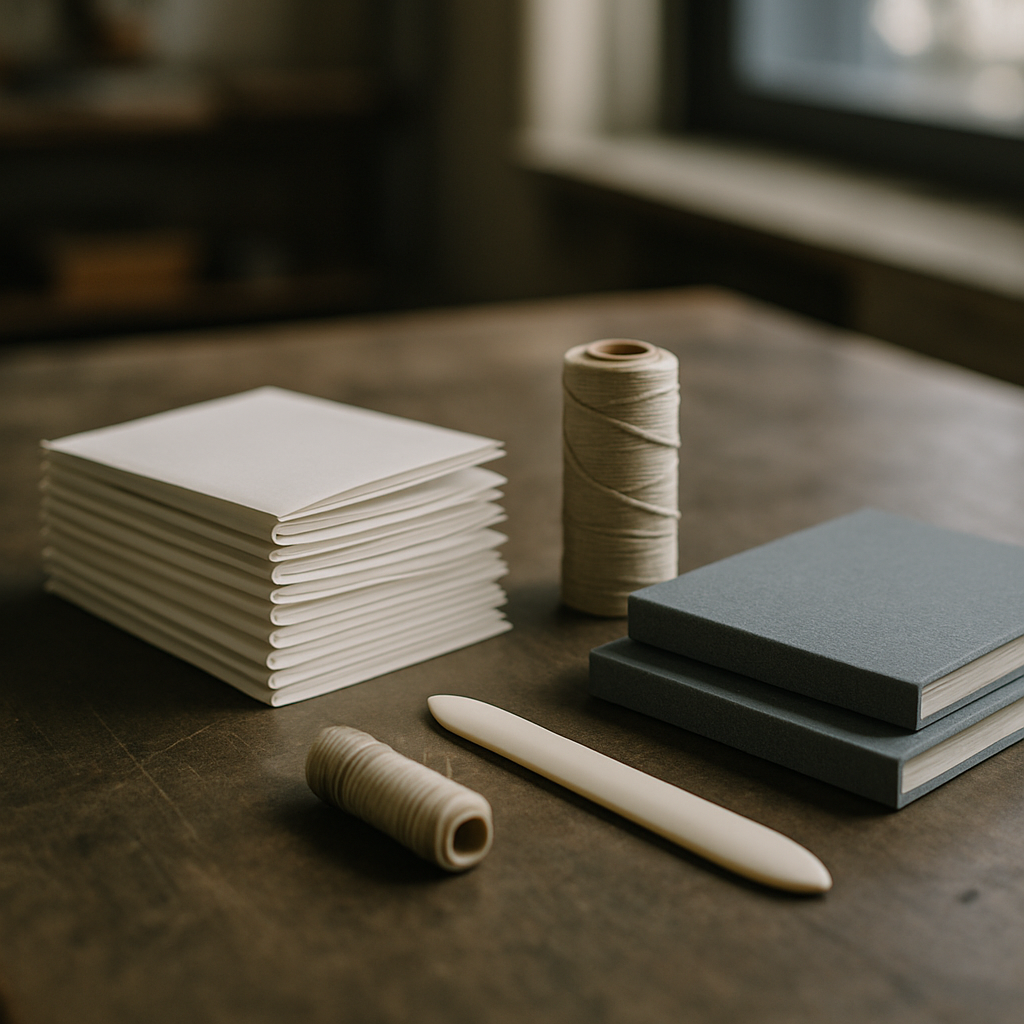
Somewhere between the disposable spiral notebook and the precious leather journal you are too scared to write in sits a third option: the book you bound yourself. Hand bookbinding is one of the most accessible traditional crafts still practised today — the core tools fit in a shoebox, the materials are cheap, and a complete beginner can sew a genuinely usable notebook in a single evening. Yet it carries centuries of technique for anyone who wants to go deeper.
For makers who love paper, thread and precise handwork, binding is a gateway drug. Here is how to walk through the door.
Why Binding, and Why Now
Bookbinding scratches an itch that many modern hobbies do not: it produces a functional object. A hand-bound sketchbook gets used daily. A pamphlet of your own poems becomes a gift. A guest book for a friend's wedding becomes an heirloom. Unlike decorative crafts that accumulate on shelves, books have jobs to do.
It is also a remarkably calm craft. There are no machines, no fumes, no noise beyond the whisper of a bone folder creasing paper. Most binding happens at a table under a lamp, with a needle, linen thread and patience. In an age of loud hobbies and louder feeds, that quietness is part of the point.
And there is the paper itself. Binders develop an enthusiast's relationship with paper the way woodworkers do with timber — learning grain direction, weight, tooth and how a sheet folds. Once you have bound with good paper, the stationery aisle never looks the same.
The Essential Toolkit
You can start binding with tools costing less than a hardback novel:
- A bone folder for crisp creases — the single most-used tool on any binder's bench.
- An awl to punch sewing holes through folded sections.
- Binding needles and linen thread. Waxed linen is strong, historical, and lovely to work with.
- A craft knife, steel ruler and cutting mat for trimming.
- PVA glue and a cheap brush for bindings that need adhesive.
That is genuinely it for your first few projects. Later you may want a small book press — though heavy cookbooks and a flat board do the same job — and eventually perhaps a sewing frame. Resist buying equipment ahead of skill; binding rewards technique far more than tooling.
Three Bindings to Learn in Order
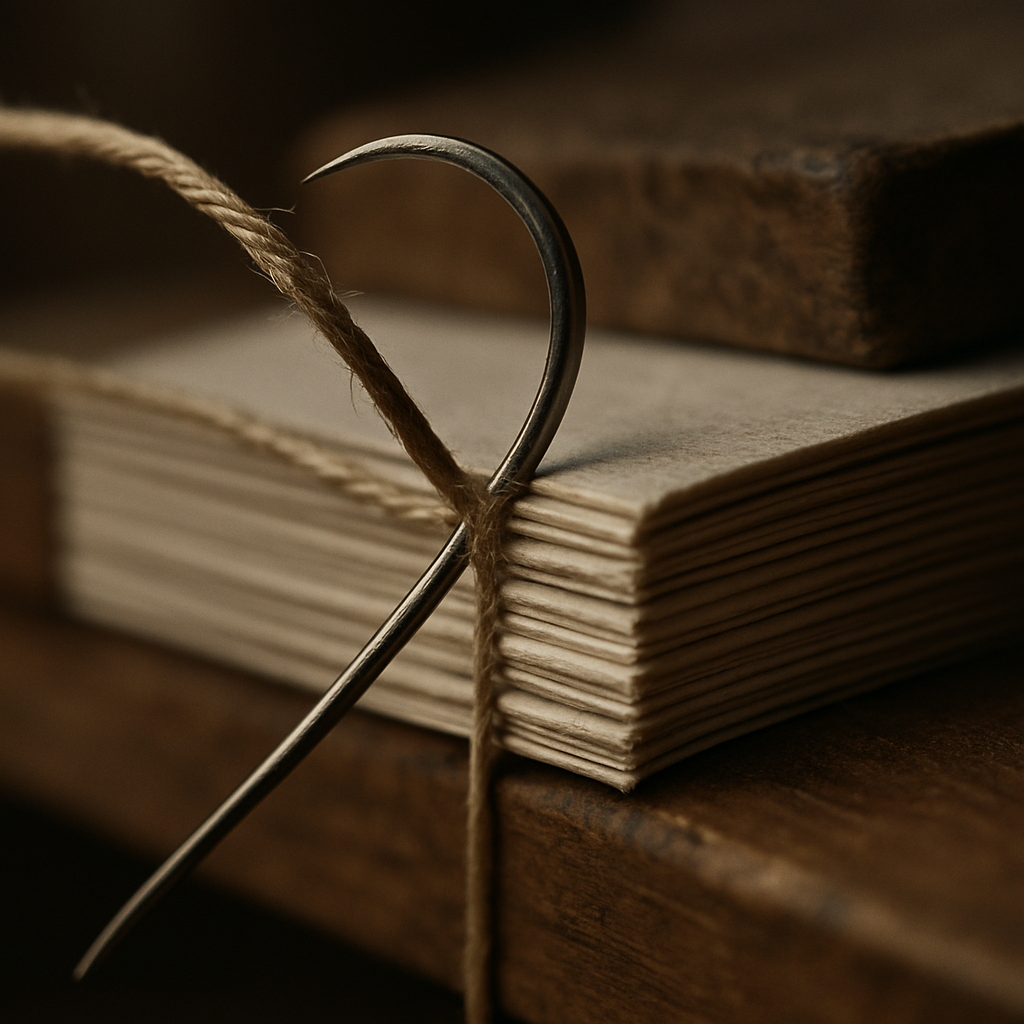
The pamphlet stitch is the perfect first project: a single folded section sewn through three or five holes with one length of thread. Twenty minutes, start to finish, and you have a zine-ready booklet. Master it and you understand the fundamental logic of all sewn bindings.
The Japanese stab binding comes next. Loose sheets are stacked and sewn through the side in decorative patterns — the four-hole yotsume toji is the classic. It is forgiving, beautiful, and ideal for binding printed pages, photo collections or recipe cards. The exposed stitching becomes part of the design, and there are dozens of traditional patterns to explore.
The coptic stitch is the hobbyist's summit. Multiple sections are sewn to each other and directly to hard covers with a chain-link stitch that remains visible along the spine. Coptic-bound books open completely flat, which makes them the favourite structure for sketchbooks. The sewing takes concentration the first few times, but the result looks unmistakably handmade in the best way.
Each of these can be learned from free tutorials, but a printed manual at the bench beats pausing videos with gluey fingers.
Materials: Where the Craft Gets Personal
Once the stitches are in your hands, materials become the creative playground. Text paper choices range from smooth writing stock to toothy watercolour paper to soft recycled sheets. Cover options are even wider: bookcloth, decorative papers, salvaged cereal-box board wrapped in maps, old calendars, wallpaper samples, or fabric ironed onto paper backing to make your own cloth.
One habit worth adopting early: always check grain direction. Paper and board bend more easily parallel to the grain, and in a book every component's grain should run parallel to the spine. Ignore this and your covers will warp; respect it and your books will behave for decades. It is the kind of invisible detail that separates a craft from a pastime.
Offcuts never go to waste. Binders keep scrap boxes religiously, and small scraps become the next pamphlet's cover.
Bind One Book, Then Another
The loveliest thing about bookbinding is how quickly it compounds. Your first pamphlet leads to a stab-bound photo book, which leads to a coptic sketchbook, which leads to friends asking — hopefully — whether you take commissions. Blank books are endlessly giftable, and nobody has ever been disappointed to receive one.
Set aside one evening, five sheets of decent paper and a metre of waxed thread. Fold, punch, sew, crease. By the time you tie the final knot you will own a small object that did not exist a half hour earlier — and a craft that can keep growing for the rest of your life.