 Studio Off Hours
Shooting on Film Again: Why Analogue Photography Is Winning Over Digital Creatives
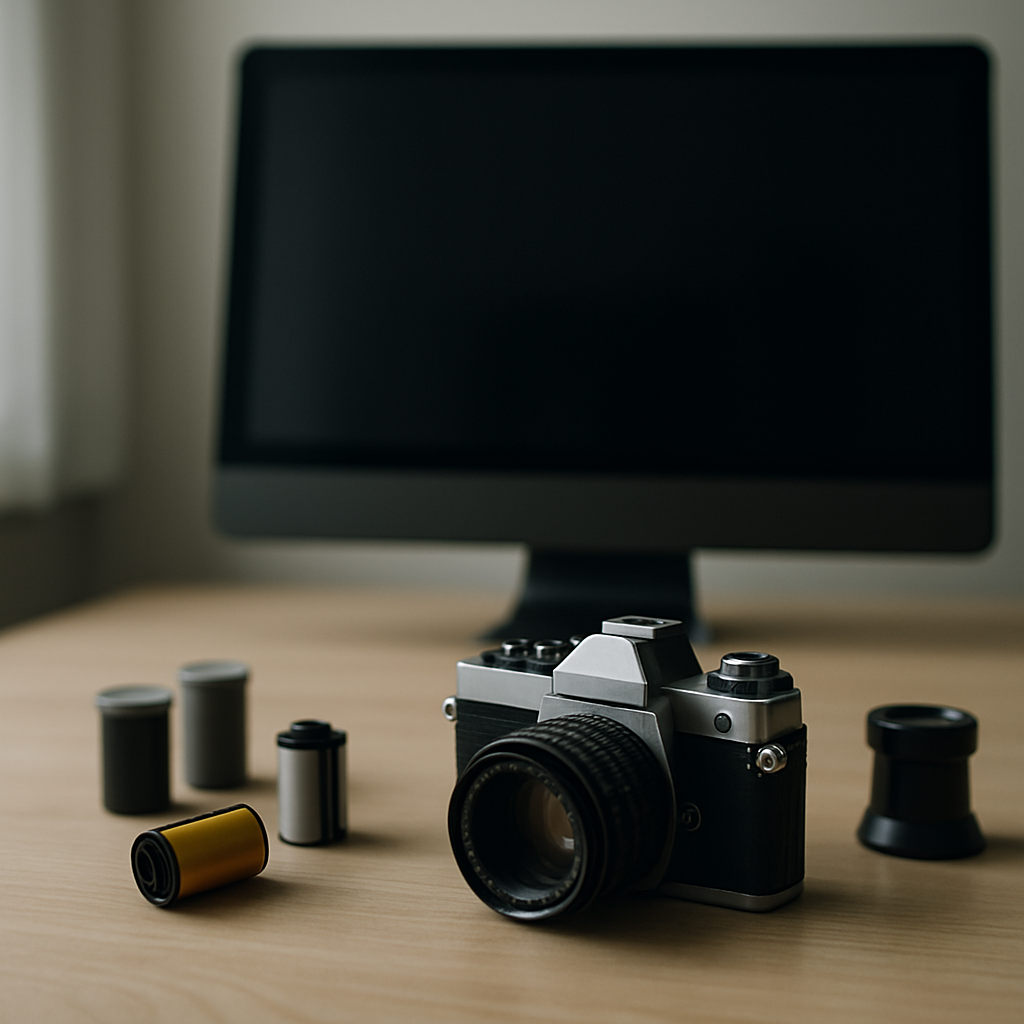
There is a strange irony in the fact that the people rediscovering film photography in the biggest numbers are the ones who spend their working lives in front of screens. Designers, developers, marketers — professionals surrounded by pixels from nine to five — are increasingly picking up thirty-year-old cameras on their evenings and weekends. It is not nostalgia for its own sake. Film offers something that digital work rarely does: a process you cannot rush, results you cannot preview, and a physical object at the end of it all.
If you have been curious about loading your first roll, here is what draws so many creatives to analogue photography, and how to get started without spending a fortune.
The Appeal of Not Knowing
Digital photography gives you instant feedback. You shoot, you check the screen, you adjust, you shoot again. It is efficient, and it is also exhausting in a way most of us never stop to notice. Every frame becomes a small performance review.
Film removes that loop entirely. You compose, you press the shutter, and then you wait — sometimes days, sometimes weeks — before you see what you made. That gap changes how you shoot. You slow down. You think about light and framing before you commit, because each frame on a 36-exposure roll costs real money. Many film shooters describe the moment of collecting their developed negatives as genuinely exciting, a feeling digital photography lost somewhere around 2008.
The imperfections matter too. Light leaks, grain, slightly missed focus — on film these read as character rather than mistakes. For creatives who spend their days chasing pixel-perfect output, that permission to be imperfect is quietly liberating.
Choosing Your First Camera
The good news: excellent film cameras are absurdly affordable compared to digital gear. A reliable 35mm SLR from the 1980s — a Pentax K1000, Canon AE-1, Olympus OM-10 or Nikon FM — can usually be found for the price of a decent dinner out. These cameras were built to last decades and many still work flawlessly.
A few practical tips for buying:
- Check the light seals. The foam strips around the film door degrade over time. Replacements cost very little and are easy to fit yourself.
- Fire the shutter at every speed. Listen for obvious differences between 1/1000th and one second. If the slow speeds sound sticky, the camera needs a service.
- Start with a 50mm lens. It is cheap, sharp and forces you to move your feet rather than zoom.
Avoid the temptation to buy a cult camera first. The point-and-shoots that influencers have driven to silly prices are not better tools for learning — they are just fashionable.
Understanding Film Stocks
Film choice is where the medium becomes genuinely creative. Each stock has its own colour palette, contrast and grain structure, and part of the fun is finding the ones that match your eye.
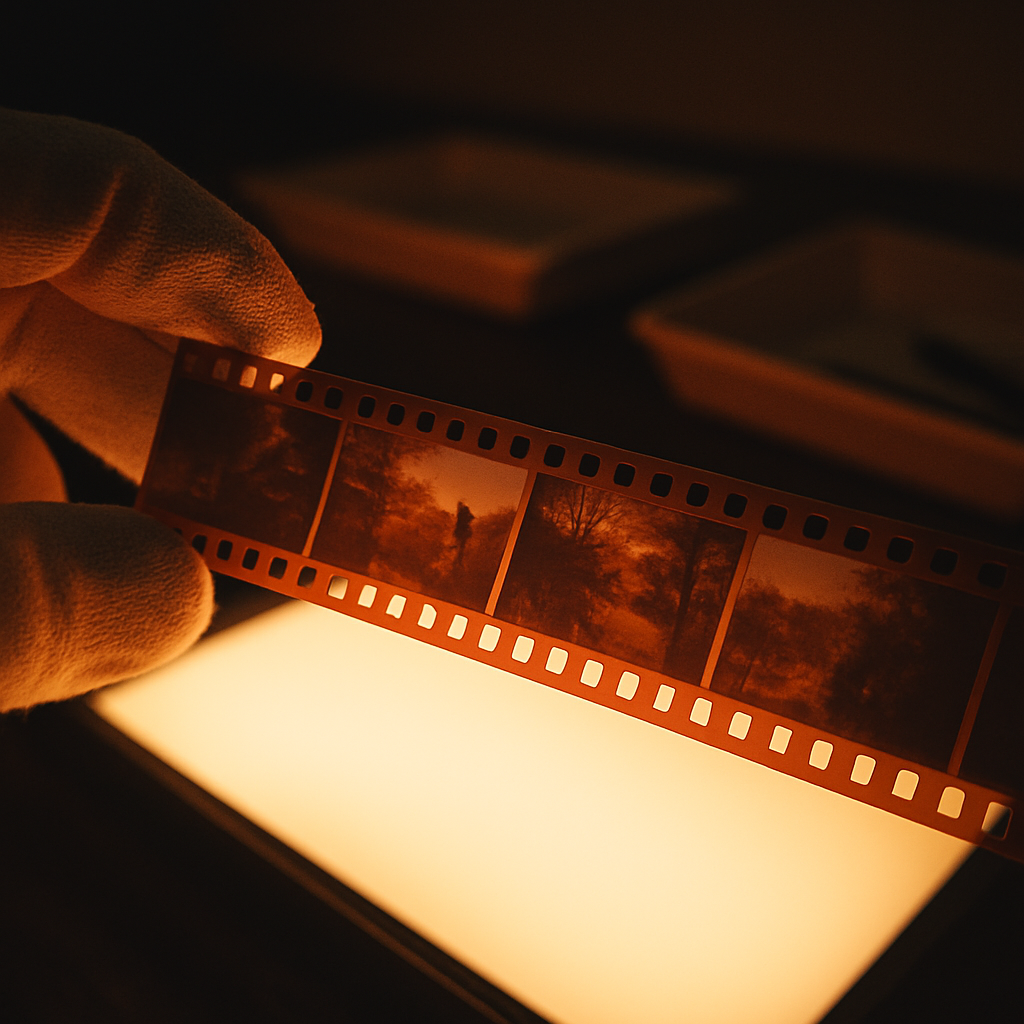
For beginners, a forgiving colour negative film like Kodak Gold 200 or Fujifilm's consumer stocks handles exposure mistakes gracefully and delivers warm, pleasant tones. Once you are comfortable, Kodak Portra is the standard for skin tones and muted colour, while black and white stocks like Ilford HP5 are wonderfully flexible and can be developed at home with minimal equipment.
Shoot the same scene on two different stocks and compare the results. It is one of the fastest ways to develop an opinion about colour — a skill that transfers directly back into design work, illustration and even interior choices for your studio.
Making It a Sustainable Hobby
Film costs money per frame, and that reality shapes how you should approach the hobby. A sensible rhythm for most people is one or two rolls a month: enough to keep improving, not enough to hurt.
Home developing changes the economics considerably, especially for black and white. A changing bag, a developing tank and a few chemicals cost less than ten rolls of lab development, and the process itself — agitating the tank, hanging strips of negatives to dry — is deeply satisfying craft work in its own right. Scanning can be done with a dedicated film scanner or, in a pinch, a digital camera and a macro lens.
Consider keeping a small notebook of what you shot, on which stock, and in what light. When your negatives come back, those notes turn every roll into a lesson.
The Print at the End
Perhaps the strongest argument for film is what happens after the shot: you end up with something physical. Negatives in a binder, prints in a box, maybe a frame on the studio wall. In a creative life where so much output lives on servers and dies in feeds, a shoebox of photographs feels almost radical.
You do not need to abandon digital, and most film shooters never do. But adding an analogue practice to your creative week gives you a slower, more deliberate way of seeing — and a reminder that the best part of making things has never been the preview screen. It has always been the surprise.